
cash home buyer

A beautiful residential home

4 Tips on How to Sell a House by Owner in NJ

Are you planning to sell a house by owner in NJ (meaning you are not working with an agent)? You should read this informative guide.

Selling a House in NJ can be a complex process, but when you’re looking to sell your home in Bergen County, going the “for sale by owner” (FSBO) route might be the right choice for you. By selling your home on your own, you can save money on real estate agent commissions and have greater control over the sales process. However, selling a home on your own can also be challenging, and there are several important factors to consider when going the FSBO route.

Tips on How to Sell a House by Owner in NJ


1. Price Your Home Appropriately
One of the most important factors to consider if you want to sell a house by owner in NJ is pricing it appropriately. To do this, research comparable homes in your area and consider working with an appraiser to determine the fair market value of your home. Pricing your home too high can turn off potential buyers, while pricing it too low can mean leaving money on the table.
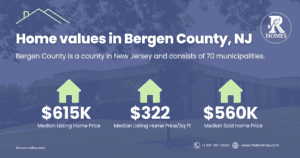
House values in Bergen County
2. Prepare Your Home for Sale
If you want to successfully sell a house by owner in NJ, make sure it’s in top condition. This means making any necessary repairs or upgrades, decluttering and depersonalizing the space, and staging the home to showcase its best features. Preparing your home for sale is a crucial step that can make all the difference in attracting potential buyers and getting the price you want. 
Tips to help you prepare your home for sale:
  1. Declutter and Depersonalize: Start by removing all clutter and personal items from your home. This allows potential buyers to imagine themselves living in the space, rather than feeling like they’re intruding on someone else’s personal space.
  2. Deep Clean: A clean home is a must when it comes to selling your property. Make sure to deep clean every room, including baseboards, walls, and carpets. Pay special attention to the kitchen and bathrooms, which are often the most heavily scrutinized areas of the home.
  3. Make Repairs: Address any outstanding repairs or issues that may deter buyers, such as leaky faucets or peeling paint. These small repairs can make a big difference in the overall appearance and value of your home.
  4. Neutralize Decor: If your home has any bold or eccentric decor, consider neutralizing it to appeal to a wider range of potential buyers. This includes painting bright walls a neutral color, removing bold wallpaper, or replacing quirky light fixtures.
  5. Stage Your Home: Consider staging your home to showcase its potential to potential buyers. This can be as simple as rearranging furniture to make a room feel more spacious or adding fresh flowers to create a welcoming atmosphere.


3. Market Your Home Effectively
To attract potential buyers, you’ll need to market your home effectively. This can include creating high-quality listing photos and descriptions, placing ads in local newspapers or online marketplaces, and social media platforms. Social media platforms like Facebook, Twitter, and Instagram have millions of users, which means that you can reach a wider audience when you use these platforms to promote your home listing. Consider working with a professional photographer to capture your home in its best light and use social media to share your listing with your network.

A data from NAR that suggest homebuyers prefer searching online for houses
This data from NAR’s 2022 Profile of Home Buyers and Sellers report suggests that most homebuyers search online when searching for a home to purchase.


4. Negotiate and Close the Sale
When you receive an offer, make sure you understand the terms and work with the buyer to negotiate a mutually beneficial agreement. To sell a house by owner in NJ you should consider negotiating the price, closing timeline, and any contingencies. Once you’ve reached an agreement, work with a real estate attorney to finalize the sale.
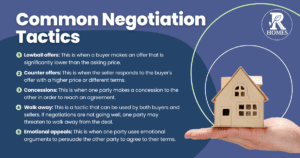
Sell a house by owner in NJ with these negotiation tactics
Learn how to sell a house by owner with these negotiation tactics
Selling a house in NJ as a for sale by owner can be overwhelming, but by approaching the process with a clear understanding of the challenges involved, by pricing your home appropriately, preparing it for sale, marketing it effectively, responding to inquiries, and negotiating the sale, you can increase your chances of success. If you need additional guidance or support, you can also consider working with a real estate attorney or professional FSBO seller service to help you navigate the process with confidence.
At Ritsel Homes, we understand that to sell a house by owner in NJ you need time and effort. That’s why we offer to buy your house for cash as-is, which means you don’t have to worry about making costly repairs or renovations to impress picky buyers. With our proven expertise and vast resources, we can help you sell your home quickly, without having to wait for months on end for the right buyer to come along. So if you’re ready to say goodbye to your old home and move on to the next chapter of your life, contact us today at (201) 379-6565.
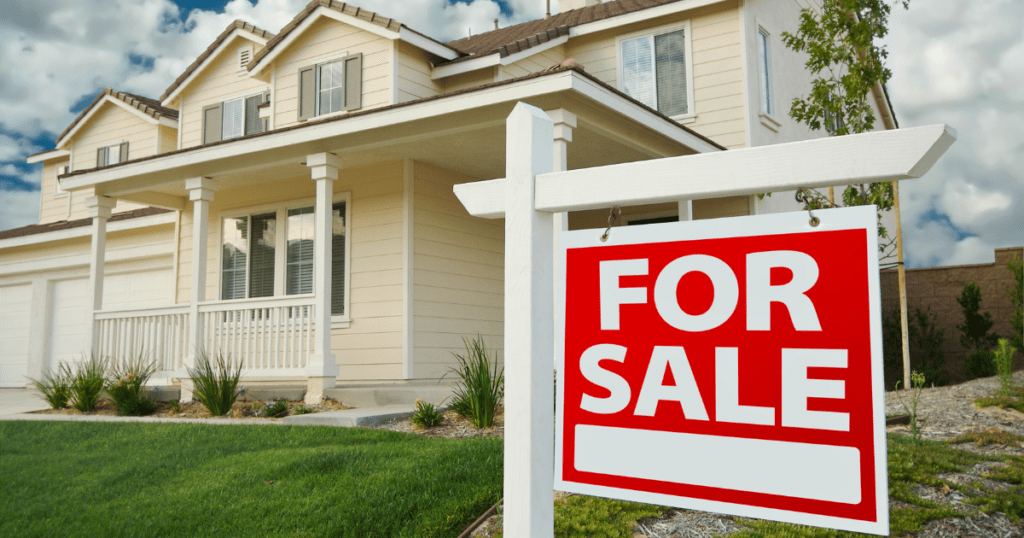
Residential house with for sale signage in front

Sell Your House Fast in NJ through Seller Financing

Did you know that you can potentially sell your house fast in NJ, generate ongoing income, and even save on taxes?
If you’re selling your house, you may be considering the traditional route of listing with a real estate agent and waiting for a qualified buyer to come along. But what if you could take matters into your own hands? 
That’s where seller financing comes in. By offering financing to potential buyers, you can increase the affordability and accessibility of your property, potentially sell your house fast and generate ongoing income for yourself. But is seller financing right for you? In this article, we’ll explore the pros and cons of seller financing in real estate, as well as the different types of seller financing available to you as a seller.”

Seller Financing in a Nutshell

Seller financing in real estate refers to a financing arrangement where the property seller provides the buyer with a loan to purchase the property. This type of financing is also known as owner financing or seller carryback financing in some cases.
Under a seller financing arrangement, the buyer makes a down payment (or not) to the seller and then makes regular payments, including principal and interest, to the seller for a specified period of time. The terms of the loan, including the interest rate, payment schedule, and repayment period, are negotiated between the buyer and the seller and are typically documented in a promissory note and mortgage or deed of trust.

Benefits of Seller Financing for Sellers

Woman holding a tiny doll house as an inspiration that you can sell your house fast in NJ
Photo by Kindel Media
Not sold on the concept just yet? Let me tell you the benefits of seller financing and why it’s a good idea to sell your house fast in NJ through this financing program.
  1. Higher sale price: By offering financing to potential buyers, a seller may be able to sell their property for a higher price than they could get through a traditional sale. This is because seller financing can make the property more affordable and accessible to a wider range of buyers, including those who may not be able to qualify for traditional bank financing.
  2. Ongoing income: With seller financing, the seller receives payments over time rather than a lump sum payment at the time of sale. This can provide ongoing income for the seller, potentially at a higher interest rate than they could earn from other investments.
  3. Faster sale: By offering financing, a seller may be able to sell their property more quickly than they would through a traditional sale, as financing can make the property more attractive to buyers who may not have the cash on hand to make a full purchase.
  4. Lower costs: By offering financing, a seller may be able to save on the costs associated with a traditional sale, such as real estate agent commissions.
  5. Reduced tax liability: Seller financing, in some cases, can potentially allow the seller to spread capital gains from the sale over a longer period of time, resulting in a lower tax liability in any given year.

Things to Consider Before Offering Seller Financing

Two people shaking hands in agreement to sell house fast in NJ
Photo by Fauxel
If you’re considering seller financing, there are several important factors to consider before entering into this type of financing arrangement. Here are some key considerations:
  1. Buyer qualification: Before agreeing to seller financing, it’s important to verify that the buyer has the financial capacity and creditworthiness to make the required payments. You should request financial statements, credit reports, and references from the buyer, and consider working with a real estate attorney to draft a comprehensive contract that includes default and foreclosure provisions.
  2. Interest rate and terms: You should negotiate the interest rate and terms of the loan carefully to ensure that they are fair and equitable to both parties. Consider hiring an appraiser or real estate professional to evaluate the property and determine a fair market value, and compare the interest rate and terms to those of other financing options, such as traditional bank loans.
  3. Risks and rewards: Seller financing carries both risks and rewards for the seller. On one hand, it can provide ongoing income in the form of interest payments and may help sell the property more quickly. On the other hand, there is a risk of default by the buyer, which could result in loss of the property and a potential legal dispute. You should carefully weigh these risks and rewards before deciding whether to offer seller financing.
  4. Legal considerations: It’s important to work with a real estate attorney to draft a comprehensive contract that includes all the terms of the seller financing arrangement, as well as provisions for default and foreclosure. This can help protect both parties in the event of a dispute or default.

Different Types of Seller Financing in Real Estate

A couple standing in front of their NJ home
Photo by Kindel Media
Here are six types of seller financing in real estate:
  1. Mortgage and promissory note: The process is similar to a traditional mortgage, but with the seller taking on the role of the bank. The buyer and seller negotiate the terms of the sale, including the purchase price, the down payment amount, the interest rate, and the payment schedule through a promissory note. The mortgage on the other hand ensure the debt is secured against the property which is offered as collateral. If the buyer defaults on the loan, the seller has the right to foreclose on the property and take possession of it to recover their money.
  2. Land contracts: Also known as a contract for deed or installment sale, this type of financing allows the buyer to make payments to the seller over time, with the seller retaining legal ownership of the property until the buyer has paid off the balance.
  3. Lease options: Under this arrangement, the buyer leases the property from the seller for a set period of time, with the option to purchase the property at the end of the lease term. The buyer typically pays an upfront fee for the option to purchase and makes monthly lease payments, with a portion of each payment going towards the eventual purchase of the property.
  4. Wraparound mortgages: This involves the seller providing financing to the buyer by essentially “wrapping” their existing mortgage with a new mortgage, allowing the buyer to make payments to the seller rather than the original lender. The seller then uses the payments received from the buyer to pay off their own mortgage.
  5. Seller-held second mortgage: In this arrangement, the buyer obtains financing from a traditional lender for a portion of the purchase price, and the seller provides a second mortgage for the remainder. The buyer makes payments to both the traditional lender and the seller.
  6. Equity sharing: Under this arrangement, the buyer and seller agree to share the equity in the property. The buyer provides a down payment and makes monthly payments to the seller, who retains a percentage ownership in the property. When the property is sold, the seller receives a percentage of the proceeds equal to their percentage ownership.

In summary, seller financing can be a viable option for selling a property, but it’s important to carefully consider all the factors involved and work with qualified professionals to ensure a successful transaction.

If you’re looking to sell your house fast in NJ through seller financing, we would like to discuss it in more detail. We could buy it as-is, in whatever condition it is, at the closing date of your choice. The best part is we do not depend on or wait for 3rd parties who have no interest in the deal other than earning a fee. We simply agree on the terms and then use a reputable title agency to transfer ownership and get you paid. Interested? Let’s talk.

Housing Market Today And What Can We Learn From Recessions Since 1980

It doesn’t matter if you’re someone who closely follows the economy or not, chances are you’ve heard whispers of an upcoming recession. Economic conditions are determined by a broad range of factors, so rather than explaining them each in depth, let’s lean on the experts and what history tells us about the Housing Market to see what could lie ahead. As Greg McBride, Chief Financial Analyst at Bankrate, says:

“Two-in-three economists are forecasting a recession in 2023 . . .”

As talk about a potential recession grows, you may be wondering what a recession could mean for the housing market. Here’s a look at the historical data to show what happened in real estate during previous recessions to help prove why you shouldn’t be afraid of what a recession could mean for the housing market today.

A Recession Doesn’t Mean Falling Home Prices

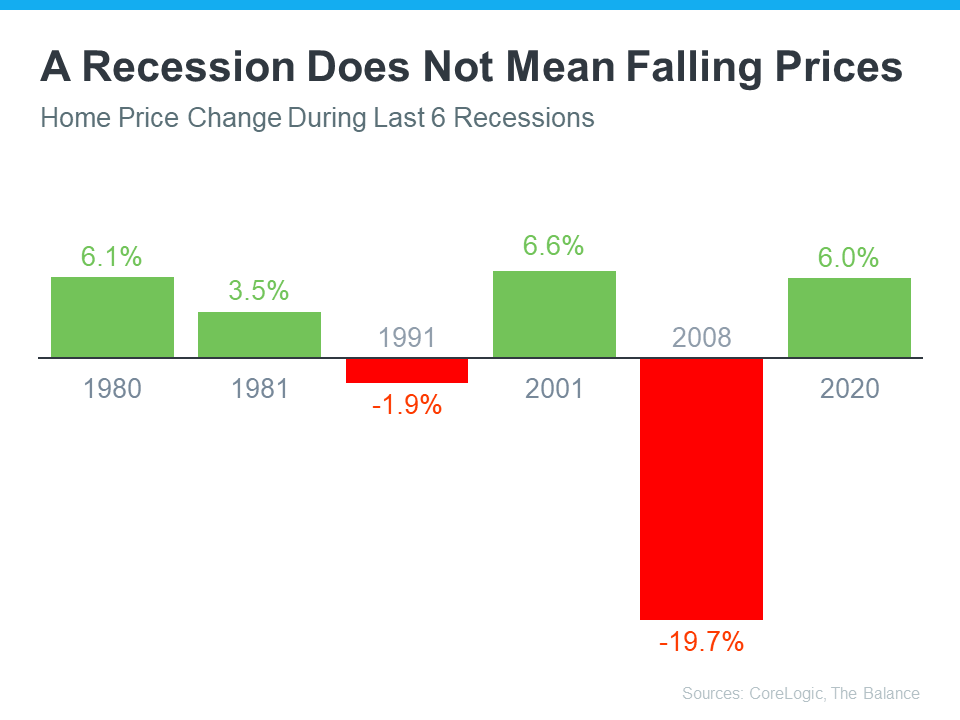
To show that home prices don’t fall every time there’s a recession, it helps to turn to historical data. As the graph below illustrates, looking at recessions going all the way back to 1980, home prices appreciated in four of the last six of them. So historically, when the economy slows down, it doesn’t mean home values will always fall.

Most people remember the housing crisis in 2008 (the larger of the two red bars in the graph above) and think another recession would be a repeat of what happened to housing then. But today’s housing market isn’t about to crash because the fundamentals of the market are different than they were in 2008. According to experts, home prices will vary by market and may go up or down depending on the local area. But the average of their 2023 forecasts shows prices will net neutral nationwide, not fall drastically like they did in 2008.

A Recession Means Falling Mortgage Rates

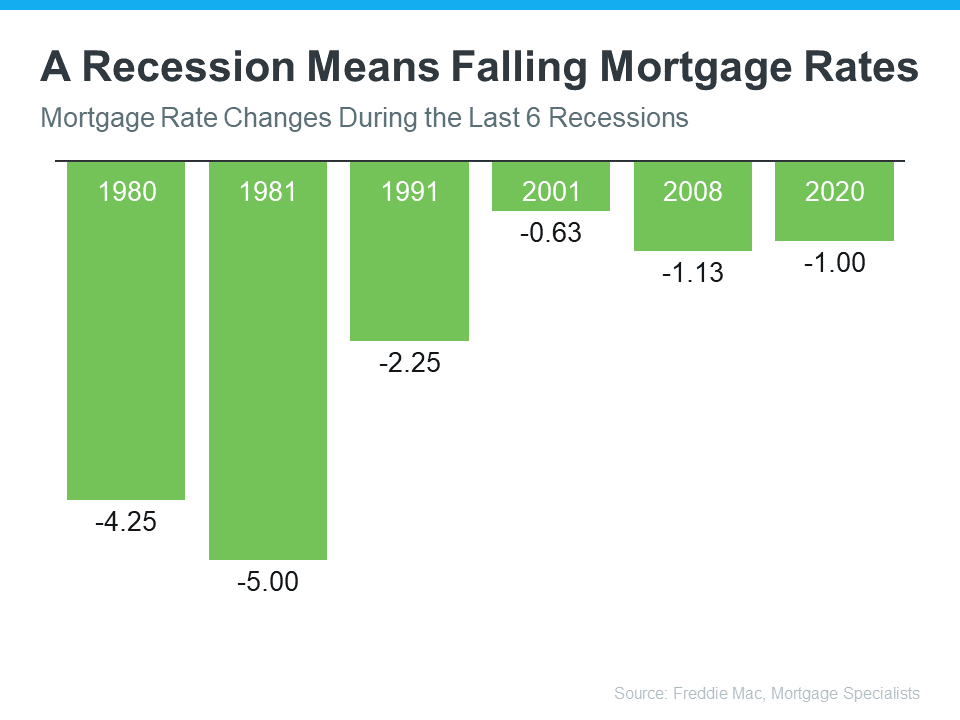
Research also helps paint the picture of how a recession could impact the cost of financing a home. As the graph below shows, historically, each time the economy slowed down, mortgage rates decreased.

What Past Recessions Tell Us About the Housing Market in 2023 | MyKCM

Fortune explains mortgage rates typically fall during an economic slowdown:

“Over the past five recessions, mortgage rates have fallen an average of 1.8 percentage points from the peak seen during the recession to the trough. And in many cases, they continued to fall after the fact as it takes some time to turn things around even when the recession is technically over.”

In 2023, market experts say mortgage rates will likely stabilize below the peak we saw last year. That’s because mortgage rates tend to respond to inflation. And early signs show inflation is starting to cool. If inflation continues to ease, rates may fall a bit more, but the days of 3% are likely behind us.

The big takeaway is you don’t need to fear the word recession when it comes to housing. In fact, experts say a recession would be mild and housing would play a key role in a quick economic rebound. As the 2022 CEO Outlook from KPMG, says:

“Global CEOs see a ‘mild and short’ recession, yet optimistic about global economy over 3-year horizon . . .

More than 8 out of 10 anticipate a recession over the next 12 months, with more than half expecting it to be mild and short.”

Bottom Line 

While history doesn’t always repeat itself, we can learn from the past. According to historical data, in most recessions, home values have appreciated and mortgage rates have declined.

If you’re thinking about buying or selling a home this year, let’s connect so you have expert advice on what’s happening in the housing market and what that means for your homeownership goals.


The information contained, and the opinions expressed, in this article are not intended to be construed as investment advice. Keeping Current Matters, Inc. and Ritsel Homes, LLC does not guarantee or warrant the accuracy or completeness of the information or opinions contained herein. Nothing herein should be construed as investment advice. You should always conduct your own research and due diligence and obtain professional advice before making any investment decision. Keeping Current Matters, Inc. and Ritsel Homes, LLC will not be liable for any loss or damage caused by your reliance on the information or opinions contained herein.

Scroll to Top
Scroll to Top